In the last ten years, the way of travelling has changed profoundly. Whereas in the past people travelled mainly to visit museums, beaches or art cities, today an increasingly large proportion of travellers choose a destination to experience music. International festivals are now one of the main reasons why young people from all over the world take a plane and travel to places they would not have considered otherwise.
Music, in other words, has become a destination.
A global phenomenon
The data confirm this. According to the Global Music Tourism Report, Music tourism generates more than USD 66 billion annually and is growing faster than many other forms of cultural tourism. 75% of travellers under 35 say that the presence of music events influences their choice of a summer destination, while major European festivals have international audiences often exceeding 50%.
Tomorrowland in Belgium is one of the most emblematic examples: every year seventy per cent of the participants come from outside the country, transforming a small Flemish municipality into a nerve centre of global electronic culture. In Barcelona, Primavera Sound has helped reshape the city's cultural identity, attracting visitors from over sixty countries. And in Serbia, the Exit Festival played a key role in the urban regeneration of Novi Sad, becoming a true case study on the relationship between festivals and territorial development.
This scenario confirms that when a musical event acquires a strong international identity, it becomes a magnet for tourism. Not only does it attract audiences, but it transforms the way an area is perceived abroad.
Why Gen Z travels to dance
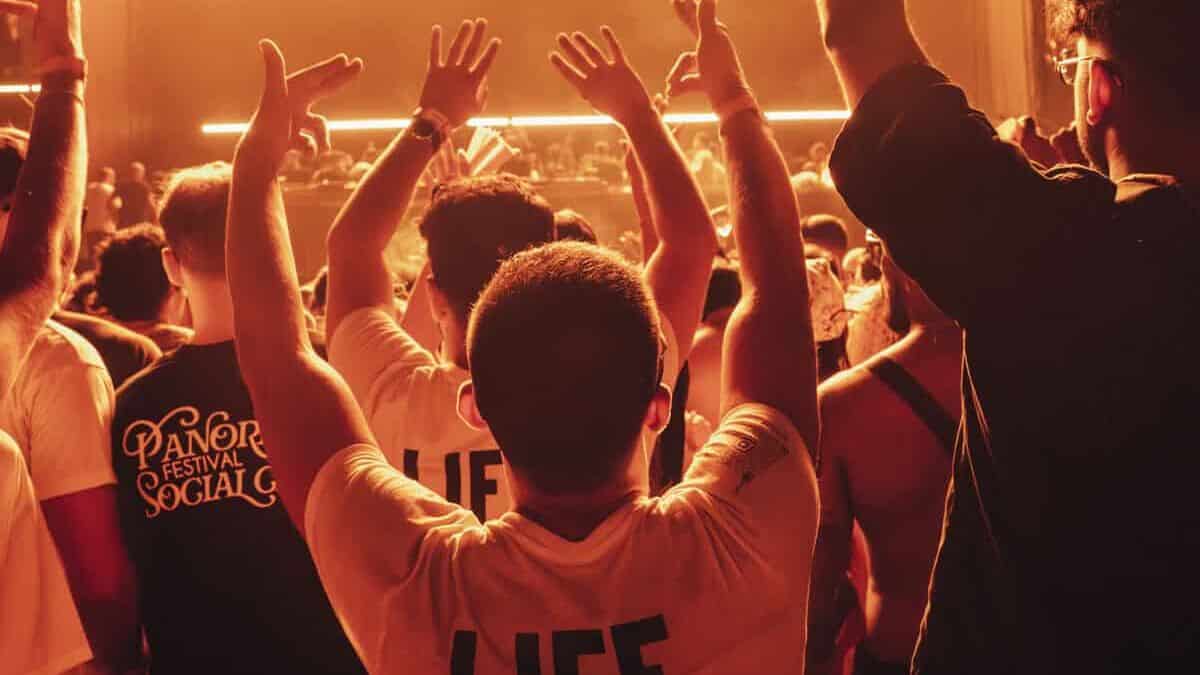
The generation driving the travel industry today, Gen Z, is not simply looking for a concert. They want an immersive experience, a story to tell, a context with a strong aesthetic identity. For them, a festival is a meeting place, a collective ritual, an opportunity to meet people from different cultures but with the same imagination.
It is also a visual question: 59% of young people choose a destination on the basis of its “Instagrammability”. Scenic locations, special natural contexts, artistic settings, evocative atmospheres: all elements that contribute to transforming a festival into a perfect set, both to experience the moment and to narrate it.
Added to this is a now decisive factor: many festivals combine music and travel in a single experience. It is the same reason why formats such as Day Zero in Tulum, Black Coffee with Lost Nomad Festival in Marrakech or the big circuits in Ibiza have exploded in recent years. The combination of an iconic artist and a unique destination becomes more than enough reason to organise a weekend thousands of kilometres from home.
Festivals as a development engine for territories
Music tourism is not only a cultural phenomenon: it represents a clear economic opportunity. Festivals attract visitors who, in addition to the ticket, spend on hotels, restaurants, transport, services and local activities. Entire sectors of the local economy are activated and benefit from the induced activity.
The most recent SROI analyses (Social Return on Investment), used to measure the impact of major events, show that a festival generates benefits not only during the days of its programming, but also in the medium to long term. In addition to the immediate tourist flow, it contributes to strengthening the cultural reputation of an area, attracting investment and consolidating partnerships with companies, artisans, public authorities and local businesses.
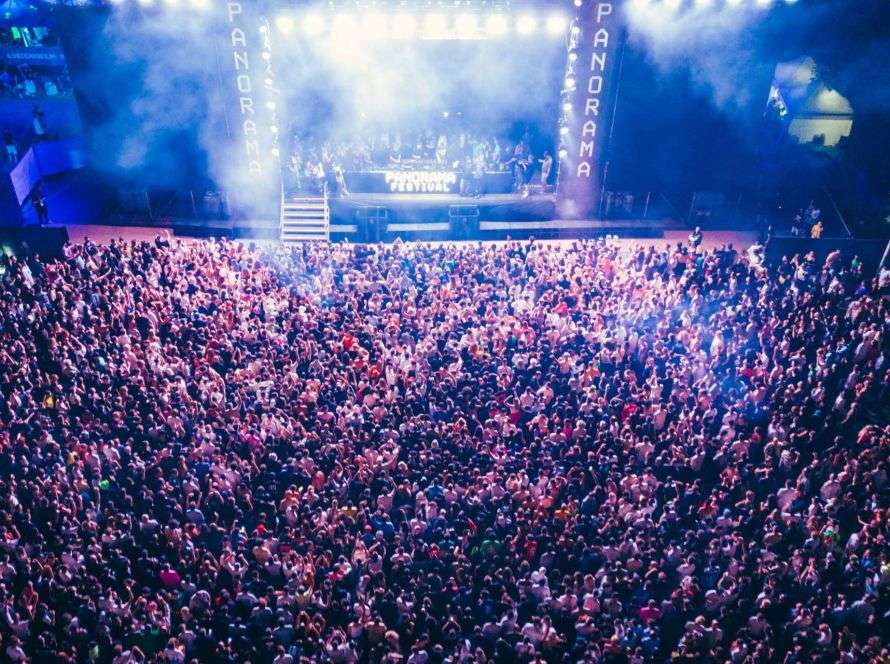
In the case of Apulia, Panorama confirmed this mechanism: over 50,000 participants in 2025 from more than forty countries, over forty Apulian companies involved, hundreds of workers and professionals activated, collaborations with associations, cultural bodies and social initiatives. An event that thus becomes not only a musical event, but an accelerator for the entire territory.
The power of place: why context matters
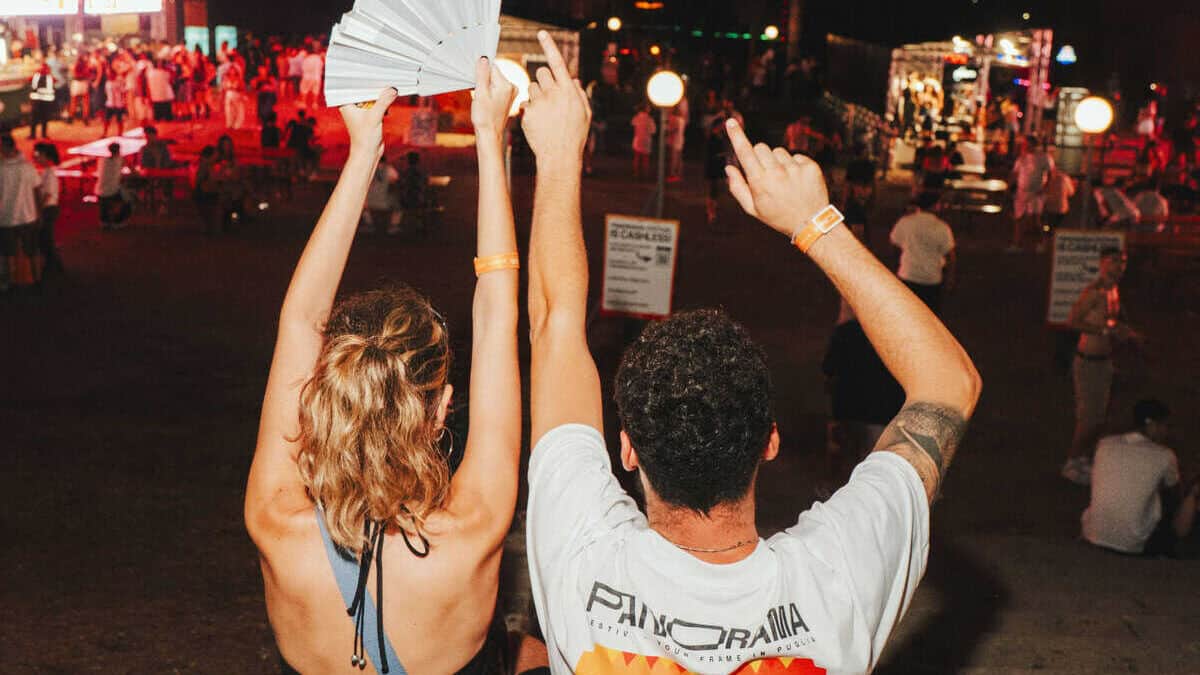
In this new paradigm, the location is not merely a container, but a central narrative element. It is what distinguishes one festival from another. It is what allows the audience to live an unrepeatable experience.
This is why nowadays concerts, festivals, events and shows prefer to choose non-traditional locations, venues that are as atmospheric as possible and that provide patrons with a total immersion in a place that remains in their memory as much as the music itself. Take, for example, the Cercle format, which since 2016 has brought electronic music to venues such as the top of the Eiffel Tower, the temple of Abu Simbel or the hot-air balloons of Cappadocia. This is exactly what music-destination tourism is looking for today: a perfect combination of artistic content and atmosphere.
Temporary Cultural Capitals
Festivals have become true temporary cities, capable of welcoming international communities for a few days a year. They are spaces for creativity, experimentation, connection. And, increasingly, they represent a new way of experiencing travel: an intense, often educational interlude, combining movement, discovery and entertainment.
It is in this direction that the future is moving: no longer festivals as mere music events, but as cultural platforms that influence tourism, the way a territory is perceived and its position in the world.
The result is simple: you travel to dance because dancing, today, means belonging to a place and a community, even if only for a few days. It means turning a journey into a powerful memory, built around music but made up of people, landscapes, encounters and stories that live on long after the last track ends.