In recent years, the concept of sustainable event has gone from being an optional choice to a strategic requirement. Festivals, concerts and major cultural events generate a significant impact on the environment, the territory and the local economy: energy consumption, mobility, waste production, use of resources, but also employment and tourism.
Today talking about sustainable festival means adopting an organisational model capable of reducing environmental impact, generating social value and producing positive economic returns in the long term. It is not just about waste collection, but an integrated approach involving every phase of the event.
A truly sustainable event works on:
- energy planning and emission reduction
- responsible and traceable waste management
- sustainable mobility
- active involvement of the local community
- inclusion and accessibility
- monitoring and measuring environmental and social impacts
Environmental sustainability in events is no longer an ancillary issue, but a strategic lever of reputation, competitiveness and territorial development.
What are CAM Events (Minimum Environmental Criteria)
As of December 2022, the CAM Events - Minimum Environmental Criteria for the organisation and realisation of events, published in the Official Journal as a Decree of the Ministry of the Environment.
I Minimum Environmental Criteria is a national standard defining environmental, ethical and social requirements for the design and management of public and private events. The aim is to align the sector with the commitments of the NRP and the ecological transition.
The main requirements for CAM Events include:
- use of reusable or compostable materials
- reducing single-use plastic
- management and traceability of waste produced
- monitoring energy consumption
- calculation of CO₂ emissions.
- communication and public awareness
In this scenario, sustainability is no longer just green communication or marketing: it becomes measurement, transparency and continuous improvement.
Panorama Festival 2025: a concrete case of the application of CAM Events
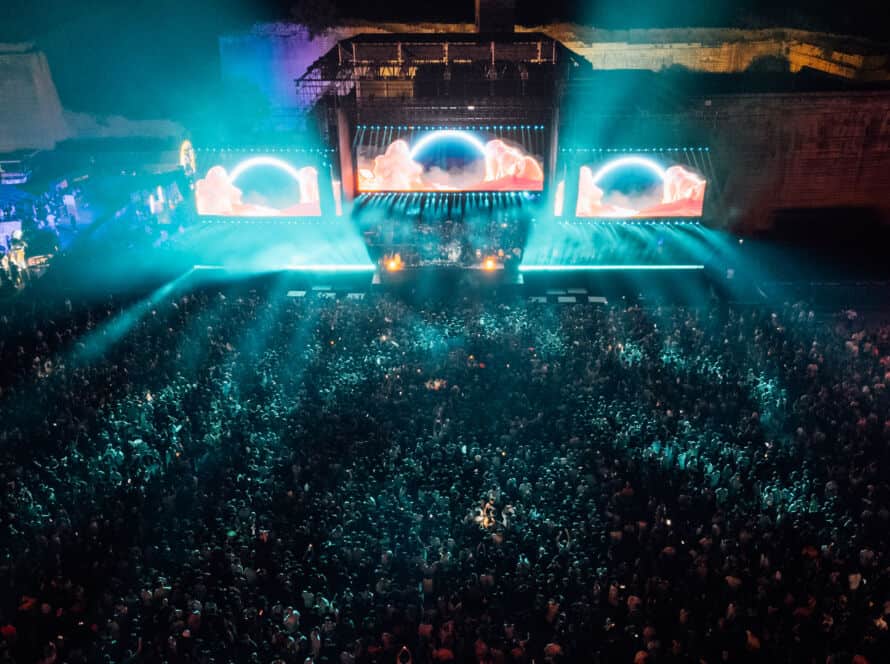
In the Italian electronic music festival scene, Panorama Festival 2025 represents a concrete example of the application of Minimum Environmental Criteria and integration of environmental sustainability into the event strategy.
The adoption of CAM principles affected several organisational aspects, starting with waste management.
Waste management and assisted waste collection
In 2025, Panorama Festival strengthened its sustainable management system through:
- 2 manned ecological islands
- 1 mobile station for weighing, sorting and checking correct sorting
- 5 environmental informants dedicated to raising public awareness
This system allowed not only an efficient waste management, but also an active involvement of the participants, turning waste separation into an environmental awareness experience.
A further fundamental step, already taken in previous years, was the use of tableware, glasses and food & beverage materials 100% compostable, which has drastically reduced the share of unsorted waste.
Calculation of CO₂ emissions and environmental offsetting
For the first time, in 2025 the calculation of CO₂ emissions produced by the festival, with an estimated 6,290 kg of carbon dioxide.
The measurement of emissions is a central step for any sustainable event: only what is measured can be improved.
Thanks to the collaboration with EcoFesta, it was possible to activate environmental compensation actions through the planting of trees balancing the emissions generated by the edition analysed. A concrete gesture that transforms technical data into active responsibility towards the territory.
Economic impact and social value: beyond environmental sustainability
The sustainability of a festival is not limited to the environmental dimension. According to the Economic Impact Report 2025, Panorama Festival generated an important tourist industry, involving numerous local businesses and contributing to the economic growth of the area.
Through the analysis SROI (Social Return on Investment) not only the direct economic return of the event was assessed, but also the social and cultural value produced for the community.
This approach demonstrates how a sustainable festival can be at the same time:
- driving force for economic development
- territorial enhancement tool
- international cultural platform
- model of environmental responsibility
Music, innovation and responsibility: the future of festivals
Panorama Festival proves that an electronic music festival can be:
- international
- culturally relevant
- economically impactful
- environmentally responsible
Sustainability is not a separate chapter of the project, but a structural component of the strategic vision of the event.
In a context where the Minimum Environmental Criteria are redefining the industry, the future of festivals goes from here: measuring, improving and creating value for the territory, the audience and future generations.